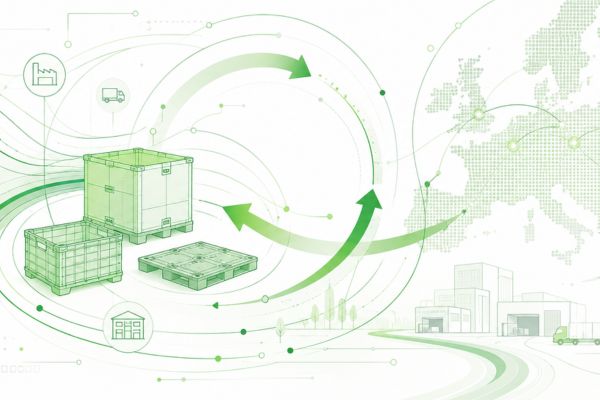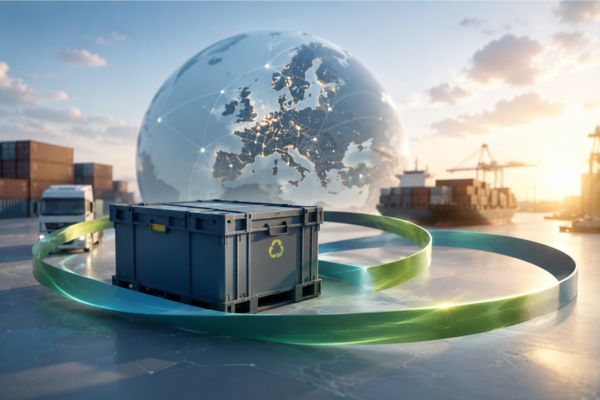
In a world where sustainability, resource efficiency, and logistical optimization are crucial to organizational success, reverse logistics is taking center stage. EcoBox offers an innovative reverse logistics system that delivers cost savings, improved sustainability metrics, and significant operational efficiency for organizations worldwide.
Defining the Role of Reverse Logistics in the Modern World
Reverse logistics is the process of returning packaging or equipment from the end user or point of use back to processing, maintenance, or manufacturing centers. Unlike traditional logistics, where the flow is one-way – from manufacturer to customer – reverse logistics works in the opposite direction, with a focus on preserving the value of the product and returning it to service.
In today’s world of scarce resources and growing environmental awareness, reverse logistics has become a strategic tool for responsible management of equipment and packaging, waste reduction, and maintaining a flexible, efficient supply chain.
How EcoBox’s Reverse Logistics Process Works
EcoBox’s system is designed to efficiently manage the entire packaging lifecycle – from collection to reuse. The process includes:
- Collection of packaging from points of use worldwide through a global logistics network.
- Sorting by physical condition, type, and future application.
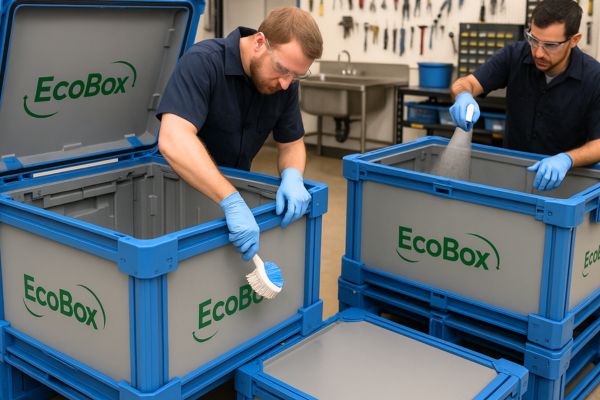
- Maintenance including cleaning, sanitizing, repairing, and replacing components if needed.
- Folding and preparing for return transport to reduce volume and save transportation costs.
- Returning the packaging to the customer in full working condition, ready for immediate reuse.
Advanced tracking systems allow for monitoring of every single unit, ensuring full control and accurate inventory management throughout the process.
Economic and Operational Benefits for Customers
Implementing reverse logistics with EcoBox offers clear advantages:
- Cost savings – eliminating the need to purchase new packaging for every shipping cycle.
- Reduced storage and transportation costs – thanks to folding capability and efficient return transport.
- Improved operational efficiency – ensuring constant availability of high-quality, ready-to-use packaging.
These benefits allow organizations to allocate resources more effectively and reinvest in further supply chain enhancements.
Environmental Contribution and ESG Metrics
The EcoBox system is fully aligned with the principles of the circular economy. Reusing packaging reduces the need for producing new raw materials, saves energy, and minimizes waste sent to landfills.
This process directly improves an organization’s ESG ratings – environmental, social, and governance performance indicators – and enhances corporate reputation with investors, customers, and regulators.
Application Examples Across Industries
EcoBox reverse logistics proves its value across multiple sectors:
- Industrial manufacturing – returning heavy-duty packaging for reuse between suppliers and manufacturers.
- International logistics – achieving major savings in cross-border transportation.
- Agriculture – reusing transport packaging for seasonal produce.
- Defense and aerospace – maintaining reusable protective cases for multiple mission cycles.
In every sector, the results are the same – lower costs, higher efficiency, and reduced environmental impact.
Conclusion
Smart reverse logistics with EcoBox is more than just a logistics service – it’s a comprehensive business strategy combining sustainability, savings, and innovation. With a structured process, advanced technology, and a global network, EcoBox enables organizations to maintain a competitive edge while making a real contribution to the environment and their long-term business success.