In the B2B industrial landscape, logistics doesn’t end at delivery. For companies seeking to build long-term customer relationships and provide added value, TAKE-BACK is becoming an essential component of service.
Reverse logistics programs are no longer just about environmental compliance. Today, they are a differentiating factor in competitive markets, strengthening partnerships, improving operational efficiency, and boosting customer loyalty. At EcoHandling, we work with clients across sectors to transform TAKE-BACK into a powerful service asset.
Turning Waste into a Service: The Printing Industry Example
Industrial printing operations produce a complex stream of post-use materials that require professional handling. These include:
- Empty ink containers (some hazardous)
- Used filters
- Print blankets that require periodic replacement
In a competitive market, print technology providers can offer an enhanced service model by integrating a TAKE-BACK program into their offering. This could include:
- Coordinated scheduling for collection of spent materials
- Safe packaging solutions for hazardous components
- Transparent reporting on quantities returned and their final treatment (reused, recycled, or safely disposed)
Instead of leaving customers to deal with waste management on their own, suppliers who take responsibility for collection and treatment demonstrate a higher level of service and care, increasing satisfaction and brand loyalty.
Streamlining Field Operations: The Automotive Aftermarket Scenario
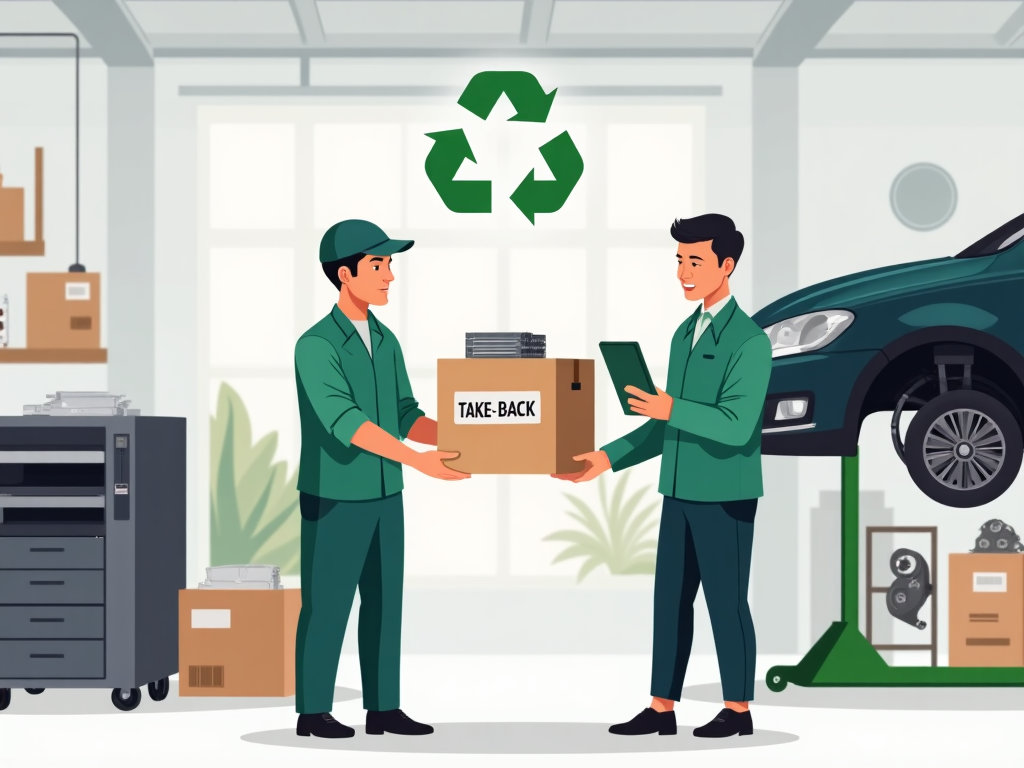
In the automotive industry, authorized workshops and service centers routinely replace defective or end-of-life components. These parts—such as electronic modules, shock absorbers, or braking components—must be returned for inspection, warranty evaluation, or controlled disposal.
A TAKE-BACK program designed for this purpose might involve:
- Pickup of damaged components directly from workshops
- Real-time tracking and status updates for service managers
- Integration with the OEM’s logistics and ERP systems
By providing a structured solution for the return of defective parts, manufacturers reduce the operational burden on service partners and maintain control over warranty processes. This not only improves efficiency but reinforces trust in the brand’s technical support.
Why It Matters in B2B
TAKE-BACK programs in B2B sectors offer more than waste reduction:
- Operational Relief: Customers don’t need to coordinate their own disposal processes
- Regulatory Assurance: Suppliers ensure materials are handled according to environmental and safety standards
- Customer Retention: Ongoing post-sale engagement improves brand experience and repeat business
EcoHandling: Building Smart TAKE-BACK Networks
At EcoHandling, we support B2B companies in designing and operating customized TAKE-BACK programs across industries. From packaging recovery to component recycling, we manage logistics, documentation, and compliance—turning reverse logistics into a structured service advantage.
In industries like printing and automotive, where service quality is key, TAKE-BACK is no longer an afterthought. It’s a service differentiator, a tool for client retention, and a commitment to smarter, more circular business models.