In a world where raw material costs are rising, availability is limited, and environmental awareness has become a standard requirement, the concept of the circular economy has taken center stage. This is not just a green trend, but a comprehensive industrial approach that reshapes how products – especially packaging – are developed, used, and reused.
Reusable packaging systems like EcoBox are a practical embodiment of circular economy principles, transforming the protective case from a one-time container into a strategic asset within the supply chain.
This article explores how circularity enhances industrial packaging, the role of recycled materials, and the operational and long-term advantages of multi-use packaging in complex logistics systems.
What Is a Circular Economy – and Why Does It Matter for Packaging?
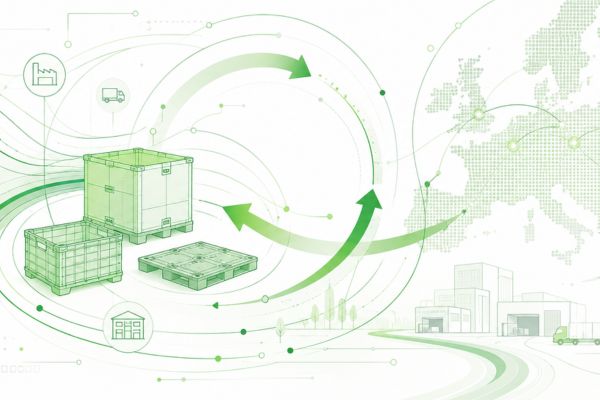
In contrast to the traditional linear model of “produce – use – dispose,” the circular economy proposes a new cycle: produce – use – return – reuse.
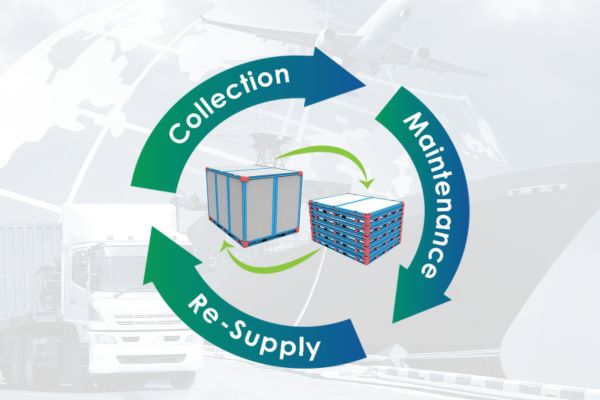
Its goal is to preserve the value of products, materials, and energy within the economic system for as long as possible. In industrial packaging, this means that protective cases aren’t discarded after use – they are collected, maintained, and put back into circulation.
The benefits of circular packaging are clear:
- Reduced demand for virgin raw materials
- Significant decrease in waste and emissions
- Smarter inventory and transport management
- Packaging becomes a recurring asset, not a single-use expense
Circular Materials: The Case for Polypropylene
EcoBox systems are made from durable polypropylene (PP) — selected not only for its strength and lightness, but also for its excellent recyclability.
Throughout its lifecycle, an EcoBox can:
- Be reused across multiple transport and handling operations
- Be returned to the service center for maintenance and redeployment
- Be sorted and recycled into new boxes when it reaches end-of-life
The use of a single material (mono-material) with no complex additives allows for complete recycling, without the need to disassemble or separate layers.
A Direct Contribution to the Supply Chain
When packaging is designed with circular economy principles in mind, it generates value on two levels:
Operational Value
- Eliminates the need for repurchasing packaging for each cycle
- Ensures high availability of transport-ready units
- Increases flexibility in cross-border or multi-site operations
Environmental & Business Value
- Supports ESG compliance and sustainability goals
- Enhances brand reputation as a responsible partner
- Creates a competitive edge in procurement and tenders
For industrial and defense clients alike, circular packaging is both a smart business move and a strategic commitment.
A Long-Term Investment That Pays Off
One of the key advantages of EcoBox and similar reusable systems is that unlike single-use packaging, the upfront investment pays itself back over time.
Savings on material purchases, waste disposal, and the protection of sensitive equipment during multiple transport cycles make for a solution that is both durable and cost-effective.
Put simply:
A circularly designed protective case works harder, lasts longer, and delivers more value.
EcoBox units are already supporting circular logistics across industries and borders.
If you’re looking for a packaging system that performs over time, is easy to maintain, and serves you again and again — it’s time to join the smart loop.
EcoBox. Because good packaging doesn’t end after the first use.