This article was written by Mor Eldar, a master’s student in Global Logistics at the Ruppin Academic Center, as part of the “Logistics in the Age of Sustainability” course.
A polluting and noisy industry
Before COVID, there were about 40,000 flights a day worldwide, and aviation accounts for about 2% of greenhouse gas emissions. Developing clean, quiet engines takes time, while demand for flights keeps growing. International agreements such as CORSIA aim to reduce emissions, but gradually.
The problem on the ground
Aircraft wait a long time on the ground on the way to the runway, because of congestion and slots, with their engines running and burning fuel.
The solution
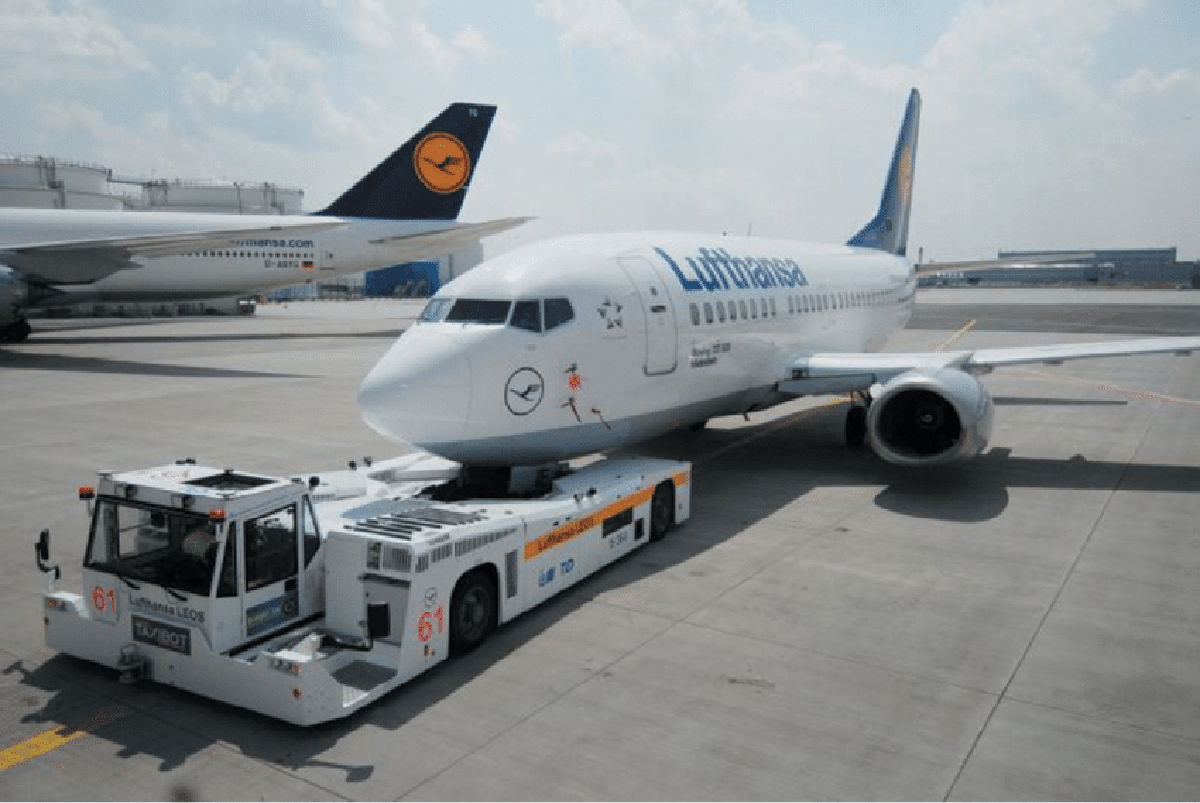
TAXIBOT is a semi robotic towing vehicle developed in cooperation with Israel Aerospace Industries, Lufthansa and the ground services company TLD. The vehicle connects to the nose wheel, the pilot controls it, and it moves the aircraft from the gate to the takeoff point. The system operates in Germany and India.
In numbers
- In a 15 to 20 minute taxi, a Boeing 747 burns about one and a half tons of fuel, about 3.2 tons of CO₂.
- TAXIBOT, with a hybrid engine, uses 25 to 30 liters and emits about 60 kg of CO₂.
In addition: faster gate turnaround, less noise and higher safety, an example of logistics innovation that combines savings with sustainability.