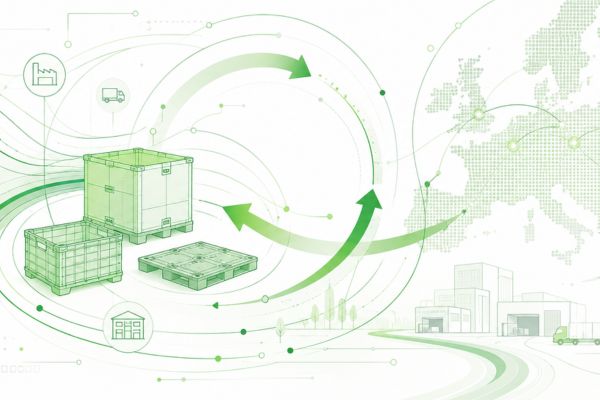
As reverse logistics solutions become a new standard, especially in the context of reusable packaging, technological components, or operational systems, a critical stage emerges as the true test of success: the first mile.
While the last mile in forward logistics is considered costly and complex, in reverse logistics, the real challenge begins at the first point of return.
The reverse logistics system operated by EcoHandling, based on a global network of service and collection centers, is specifically designed to overcome this crucial stage – where the effectiveness of the entire system is determined.
First Mile? It’s About Taking Responsibility
In logistical terms, the first mile of reverse logistics refers to the moment when the return process begins: when a product, component, package, or system is still at the customer’s location and must be collected and reintegrated into the supply chain.
In business terms, it’s the moment where true operational responsibility begins. Can the company collect the item? Coordinate with the customer? Ensure condition and completeness? Manage documentation and cross-border movement?
For reusable packaging systems like EcoBox, this phase requires a sophisticated mechanism that tackles five key challenges:
1. Geographic Dispersion and Local Coordination
EcoBox users are often spread across multiple global locations. Each collection point requires custom coordination — often in different countries, languages, time zones, and with local operational constraints.
An effective solution must:
- Operate through a local partner network
- Identify appropriate collection locations per client
- Automate reminders based on usage levels
2. Inconsistent Return Conditions
Returned packaging is rarely received in its original state. Damage, missing labels, or incomplete contents can affect the ability to quickly clean, inspect, and reissue the box.
This is where robust processes come in:
- Simple, effective inspection protocols
- Customer guidance for proper return preparation
- Digital documentation and scanning on pickup
3. Regulatory and Border Crossing Complexities
Reverse logistics often involves returns that don’t go back to the country of origin or are not returned in their original form. This raises issues around customs clearance, environmental regulations, and import/export requirements.
EcoHandling addresses this through:
- A dedicated team handling regulatory processes
- Proper documentation supporting each return
- Expertise in managing cross-border product returns
4. High and Unpredictable Transportation Costs
When pickups are unscheduled, scattered, and low-volume, transportation costs can spike. The key is to optimize the first-mile stage and reduce potential points of failure.
EcoHandling uses:
- Consolidated regional pickups
- Smart shipment management tools
- Flexible pricing based on geography and client setup
5. The Return Experience Matters
Customers should not view the return process as a burden. On the contrary — a smooth, fast, and transparent pickup process builds trust and enhances loyalty.
EcoHandling offers:
- One-click return scheduling
- Full visibility into return status
- Multilingual customer support
EcoHandling: Because Reverse Logistics Starts with the First Mile
The success of any reverse logistics system is not only measured by what happens at the end – such as reuse or recycling, but at the very beginning, when the return journey begins.
The more streamlined, coordinated, and customer-friendly this stage is, the higher the system efficiency, the lower the cost, and the more robust the circular model becomes.
If you operate international return flows and are seeking a reliable, scalable, and intelligent way to manage your reverse collection processes – EcoHandling is built to lead the way.
The first mile is the challenge. The solution starts here.