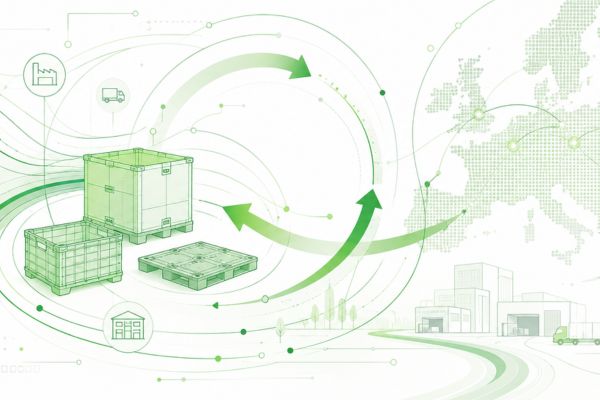
When people talk about green packaging, many shy away from plastic, because of its link to the oil industry and images of single-use bags and cups. But it is important to distinguish between single-use plastic and packaging designed for reuse.
The life cycle of a wooden crate
The wood is cut in forests in countries such as Russia, Brazil, Canada, Indonesia and Congo, passes through sawmills, is shipped through ports and manufactured into crates. Usually the crate is used for one shipment and then thrown away. The logging itself stops the tree from absorbing carbon, and with every shipment the process starts again.
The life cycle of a reusable plastic crate
The crate is made from polymers, in a process with similar stages. The difference: it is designed to withstand many shipments, and at the end of its life it can be shredded and turned into raw material.
The bottom line
The pollution from raw material production to finished crate is similar in both cases. But because the reusable crate saves repeated logging and manufacturing, it reduces air pollution emissions by up to 70%.
Additional advantages
- A single purchase instead of ongoing procurement, and no disposal costs.
- Better protection of the cargo against water and damage.
- Higher safety for workers.
This is exactly the logic behind EcoBox and MAGEN: packaging built to come back, again and again.